


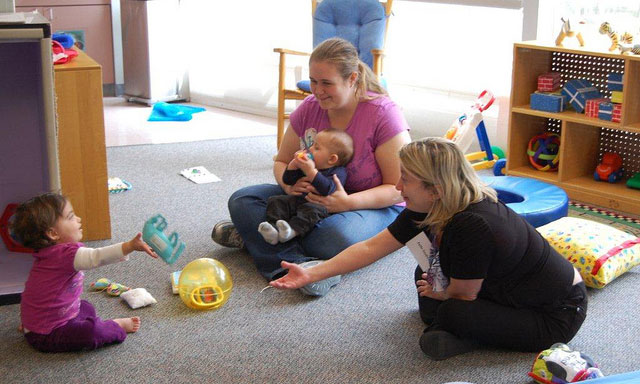
Considering the number of news reports concerning child abuse committed in daycare facilities, choosing a good daycare center is absolutely crucial for you and your child.
You’ll need to make sure that the daycare facility you choose has a clean record and is second-to-none in terms of safety and cleanliness, but that’s not always easy to do. If you’re currently shopping around for a daycare provider, you may want to take a look at the following tips, and use them when comparing daycare facilities in your area and price-range.
Here are our tips for finding and choosing the best daycare facility for your child:
1) Do Your Research
Research plays an important role in selecting the right daycare center for your child. Carry out detailed research of all the available daycare facilities in your area, and remove any from your list that are not licensed, are not appropriately staffed, or which have a history of violations. Check the state licensing board, look at online reviews & social media posts, and look for message boards or online communities where parents can have an open discussion.
- Licensing — Make sure that the entire staff is licensed at the daycare. Not all of them will be caregivers, but those individuals who are not caregivers should still be background checked in the same way that the caregivers are.
- Background Checks — Daycare centers are required to perform background checks on employees to check for criminal records. Screening can also turn up a history of substance abuse or emotional instability. Make sure the daycare checks the backgrounds of anyone who works at the facility. The daycare should use multiple background checking services to ensure that they’re offering the highest levels of accountability to parents.
- Online Reputation — Check online for any information you can find about the daycare (e.g., news reports, licensing violations, online reviews). While anonymous reviews are sometimes unreliable, they can give you insight into issues you may not have considered.
- Other Parents — Try to contact, and if possible, interview the parents of other children who attend the same daycare facility. Ask for reasons why the daycare center is acceptable or unacceptable. The information you gather may be immensely helpful in determining whether or not the facility is right for your child.
2) Call the Daycare Facility
Once you have carried out the proper research, the next step is to request an over-the-phone consultation. Talk to the manager or owner at the center to learn more about the facility and the services offered by them. If you have questions or concerns at all (e.g., background checks, staffing ratios, allegations of abuse or neglect, etc.), do not be afraid to ask! Obtaining this information early on can prevent unpleasant surprises later on.
- Staffing — Is the child-staff ratio balanced? Are there enough staff members on duty to support the needs of the children? Do they have experience? Have they been with the daycare for some time? What is the typical turnover at this facility? What methods are used when screening new (and existing) employees? Who else will have contact with your child?
- Programs — Is there an organized schedule or program? Is there supervised rest time? Does the provider read stories to the children? Do you observe creative play? What kind of snacks and drinks are provided? What kind of books and toys are provided?
- Health & Safety — Is the furniture safe? How about the play materials and outdoor equipment? Are cleaning materials and medicines kept safely out of reach of children? Do they have a readily available first-aid kit? Does it have sanitary bathrooms and diaper-changing areas? What are the procedures for picking up your child? What is their sick child policy? Have there been any health or safety incidents/concerns in the past 12 months?
- General — Are there security cameras throughout the facility? Can these cameras be accessed by parents throughout the day? Are recordings made and archived? How is good behavior encouraged? How is bad behavior discouraged? Are other parents visiting or involved with children? Do you see generally happy children? What sets your facility apart from the others?
3) Drop By for an In-Person Visit
While researching is a vital step, visiting the daycare in person gives you a better overall understanding of how the facility operates. Take a look around the facility and see how easy it is to look in on the children and the workers.
- Take a Serious Look at the Infrastructure — You cannot overlook the issue of the building’s safety. Do you notice any potential hazards or unclean conditions? The facility should have sufficient space and the basic amenities you’d expect. Opaque doors and obstructions to view should not be tolerated. Ideally, the doors should be glass so that children cannot be isolated at the facility. Check the bathrooms to make sure there aren’t any places where children can be isolated in them as well.
- Observe How Staff Interacts with Children — Are staff members interacting with the children? Are any staff members glued to their phone? Is the atmosphere fun and enjoyable to the children in their care? Do you have concerns about the child-to-staff ratio?
- Bring Your Child — Take your child to see the center and observe how he or she gets along with others and with the teachers. Your child may have a sense that something is off. If your child is not comfortable there, trust his or her instincts and keep looking.
- Talk to Other Parents — If you see other parents dropping their children off, try to strike up a conversation. Ask for reasons why the daycare center is acceptable, and if they’ve had concerns or issues in the past. The information you gather may be immensely helpful in determining whether or not the facility is right for your child.
We strongly suggest that you stay involved even after selecting a daycare center, and arrange for parent-caregiver meetings regularly. Maintain relationships with other parents, and look for communities on Facebook and Nextdoor that will help you stay informed and involved. Pay attention when you drop off and pick up your child, as this will allow you a bit of personal supervision. Imagine how much better every daycare center would be if parents got more involved!
Warning Signs to Watch Out For
- Employees that Make You Uneasy — The most-common way to refer to people that make one uneasy is to say that they “give you the creeps” or that there’s something “off” about them. These motherly (or fatherly) instincts shouldn’t be ignored. If you feel uncomfortable with one of the workers, and even if they are licensed and background checked, you may want to consider a different facility.
- Employees that Seem Mean — Sometimes you’ll see a daycare worker that seems to like children only as much as is required to get paid, and no more than that. These employees should be taken as red flags. If an employee seems annoyed with the children or appears as if they don’t genuinely enjoy spending time with them, don’t waste your time. Every daycare worker will have bad days and children can test even the most laid-back person’s patience, but none of the employees should seem like they only tolerate children; they should genuinely enjoy their jobs.
- Odd People at the Facility — Other parents, like everyone else, come in all shapes and sizes. You might see everyone from police officers to long-haired bikers picking up their kids, but you shouldn’t see strange people actually hanging around at the facility. This is a sign of poor security and management. Employee’s spouses, adult children, and significant others have no business being at the facility, and especially have no business interacting with children.
Stay Vigilant
Violating a child’s innocence is unforgivable. A daycare center owes you a responsibility to keep your child happy and safe. If there is ANY sign of daycare abuse or neglect, get your child out of harm’s way as soon as possible and report any suspicions of abuse or neglect to the proper authorities.
Remember that child abuse and neglect can happen anywhere. While you cannot prevent instances of abuse from occurring, doing your due diligence is vital to ensuring the health, happiness and safety of your child.